

Latest from IPE Magazine – Page 36
-
Country Report
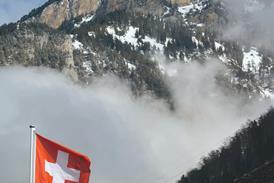
Swiss retirement is becoming more flexible
Swiss pension funds are starting to offer members greater flexibility in how they access their retirement savings in their old age
-
 Special Report
Who decides if investors can pursue sustainability objectives?
Pension funds must be prepared in case their members don’t care about sustainability
-
 Special Report
Investors’ climate lobbying turns from corporates to sovereigns
Engagement efforts with companies on climate issues have fallen short, and investors are now raising the stakes by lobbying governments on climate policy
-
 Special Report
Sustainable finance professionals take stock
IPE asked the responsible investment leads of top European asset owners a key question: has the ESG / green finance movement been effective in achieving a more sustainable economy? Here are their answers
-
 Special Report
Natural capital and biodiversity: betting on disclosure for nature
The Taskforce on Nature-related Financial Disclosures (TNFD) has taken a pragmatic approach to developing its final recommendations
-
 Opinion Pieces
Ireland – future pensions tiger
Ireland stands a few policy steps away from the creation of a serious first and second-pillar pensions architecture that will improve the country’s international standing in terms of retirement provision.
-
 Analysis
Trust will matter in light of market dominance of UBS in Swiss institutional business
One of the most important aspects of the downfall of Credit Suisse and the subsequent takeover by UBS is that loss of trust comes at the highest possible cost
-
 Analysis
Accounting standards: stuck between practicalities and principles on climate change
The International Accounting Standards Board is considering changing its rules on how companies make disclosures about climate-related and other so-called uncertainties in financial statements
-
 Analysis
The pension consolidation masters: learning from the Netherlands
What can other countries learn from the Netherlands about pension fund consolidation?
-
 Features
Market volatility: low risk does not mean ‘no risk’
Efforts to produce an accurate estimate of market risk can sometimes turn into a pessimist’s paradise, leading to a paradox. If the outcome of the estimation looks positive, investors might feel that they should not count on it, and if it looks negative, the real outcome will probably be worse than expected. From that perspective, the third quarter of this year was a very unusual one, quantitatively speaking. Not only did both risk and return decline simultaneously – a rare event – but investor sentiment also turned negative during the quarter, ending at its lowest level since the March banking crisis.
-
 Features
Fixed income, rates & currency: interest rates the big question
In August, when Fitch Ratings downgraded US debt from AAA to AA+, it cited an “erosion of governance” as one of the key reasons for its decision. September’s US government shutdown chaos will probably not have improved perceptions of US lawmakers’ proficiency to govern.
-
 Features
Qontigo Riskwatch – November 2023
*Data as of 29 September 2023. Forecast risk estimate for each index measured by the respective US, World and Emerging Markets Qontigo model variants
-
-
 Opinion Pieces
Regulation of private markets is essential
The private markets industry is feeling the pinch. Private equity managers, in particular, are having a hard time raising capital and exiting investments. There are also questions about returns from recent vintages, as businesses struggle with inflation and a choppier trading environment. Meanwhile, private credit managers are pushing back loan repayments to safeguard returns as higher interest rates reduce borrowers’ ability to fulfil their obligations.
-
 Opinion Pieces
Irish pensions auto-enrolment is a worthy challenge
Irish citizens are set to get a retirement boost following the government’s decision to implement its auto-enrolment retirement savings scheme in 2024. That is, if all goes to plan. Under the proposed scheme, which has been a topic of debate in Irish politics for at least 15 years, employees will have access to a workplace pension savings scheme that is co-funded by their employer and the state.
-
 Interviews
Private equity managers are keeping pension funds happy – in most cases
The private equity industry faces significant pressures. IPE asked Nordic pension funds about their experience with this growing asset class.
-
 Features
Pricing the decline of democracy for investors
History does not progress in a linear way. Science, democracy, technology, arts, the economy and any other type of evolutive process advance and recede in chaotic movements, even though they ineluctably move towards progress. Those recessions and pull-backs often go unnoticed at first, at least to the casual observer. And yet, they end up profoundly sanctioned by all stakeholders including the economy, financial markets and investors.
-
 Interviews
Real assets at the core for Migros Pensionskasse
Christoph Ryter (pictured left) and Stephan Bereuter of Switzerland’s Migros Pensionskasse tell Luigi Serenelli about the fund’s asset allocation strategy and guiding sprit of self reliance
-
 Features
Regulators set sight on private market fund valuations
The current waves of rising inflation and interest rates, economic uncertainty and market volatility may eventually be remembered as just a temporary setback for managers of unlisted assets. But the regulatory initiatives announced in recent months, following pressure from investors and the public, could bring about deeper changes to the buoyant private markets industry.
-
 Interviews
Opening private markets to smaller investors
“One of the biggest differentiators for us in comparison to other private markets businesses is our focus on the use of technology within the business,” says Hartley Rogers, chair of Hamilton Lane.